Norfolk Honey - getting started - a new hive with bees in it

Norfolk Honey - new equipment made to order with bees

New beehives made to order
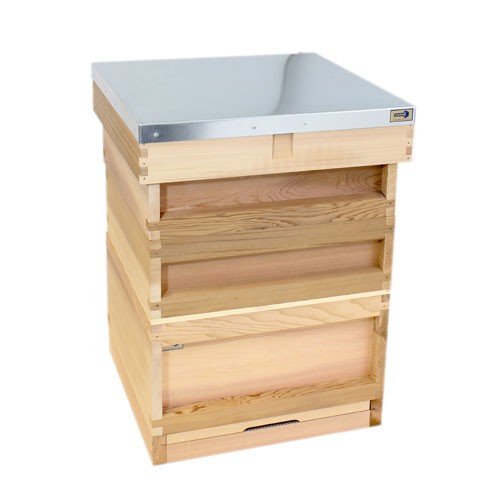
I make up beehives to order - please see the pictures below (click on each picture to see it larger)

New beehive just put togther and ready to go New beehive with the roof of New beehive opened showing supper and brood box New beehive opened showing frames, supper, brood box, crown board, floor and entrance block Brood box for honey bees

Getting started

The complete hive with bees - from the bottom up

Varroa open mesh base (floor) with entrance block -- Made up £30
The beehive floor has had some considerable attention paid to it since the Varroa mite reached the UK some ten to fifteen years ago. Now open mesh floors are recommended as the mites fall through the mesh onto the ground. The bees don't seem to mind the extra ventilation and it's possible that open mesh floors help to prevent dampness in the hive over the winter.

British Standard National Bee Hive -- Made up £30
The size of the brood box has been developed and experimented with over the years and there are now a variety of sizes on the market. I find that it is easier if all my kit fits together and is exchangeable with other beekeepers and I therefore stick to the British Standard Deep box specifications. There are good arguments for some of the other sizes of brood box but the ease of use that standardisation offers outweighs the other arguments for me.

12 brood frames -- Made up @ £2.50 each = £30
The frames that go into the brood box are called brood frames or deep frames. I use Hoffman self spacing frames that slide on the metal runners in the brood box and sit together neatly automatically leaving the required bee space between each frame. There is no need for plastic spacers with Hoffman frames.

Crown board with feeder hole in the middle -- £10
The crown board sits on the top of your hive immediately under the roof. In the summer that is likely to be on top of a super. In the winter it is going to be on top of your brood box. The crown board has a hole in for feeding through. In the summer I cover the hole with a piece of glass (window pane) the bees will then seal down the glass with propolis. Some crown boards have the hole cut in an oblong shape to take porta bee escapes (as in my photograph). I don't use bee escapes preferring the bee brush method for taking off the honey. My crown boards have a single round feeding hole in the middle of the board.

Bees on four frames with a marked 2009 laying queen -- £185
When I make a new brood box up ready to travel with bees in it I initially make up twelve new brood frames as I assemble the brood box. In order to put the bees in the box I swap four of the new frames from the side of the box and exchange those frames for four frames from an existing colony that have bees and brood on. So I am taking four frames out of an established hive that have brood and stores on them and putting them at one side of the new brood box. One of those frames of course has the all important queen on as well. So the new brood box has eight un drawn brand new frames with no bees or stores on and four older drawn out frames with brood and stores on. Later in the year (July) you may get three frames of bees and brood and only one frame of honey that will be taken from my stores.

I can fix the box to the floor and tack the crown board down in order that the new brood box with bees in it can be moved easily and if you wish you can put a strap on as well so that you can be certain that the brood box and floor don't come apart in transit. I will tape over the hole in the crown board and wait until the evening once the bees have been put in box for the bees to stop flying before I tape up the entrance block. Therefore the ideal time to pick up a brood box with bees in is in the evening at dusk or first thing in the morning.

The brood box on the open mesh Varroa floor and the crown board on top will easily fit into the boot of a car and the open mesh floor allows plenty of air for traveling. I find that a couple of old pillows or cushions can be used to stuff up any extra space to stop the box from rocking around in the boot.

Once the box has been transported to a new destination and sited it's easy to pull the tape off entrance block to open it up to enable the bees to fly.

After a day or two once the bees have settled down in their new location the tape can be pulled off the crown board and a feeder put on. Even if it is in the height of the season the bees in a new box with new frames will need to be fed because only four of the frames in the box are drawn out. In order to make the wax to draw out the new frames the bees need a lot of energy and a constant supply of feed will give them the energy they need and encourage the queen to lay eggs.

The building up of numbers is the main priority once you get them home. When the bees have built their numbers up and the queen is laying on four or five frames and most of the new brood frames have been drawn out then it will be time to stop feeding them and time to put on a super so that your bees can start to make honey. They will start putting honey into the super frames above the queen excluder before they finish drawing out all of the outside frames in the brood box.

Price for the above £285


To make the above into a complete hive you will need a queen excluder, some supers and a roof

Queen excluder (metal) -- £10
On top of the brood box fits a queen excluder that prevents the queen and the drones from going upwards and accessing the supers where the honey is stored. I like the the metal perforated queen excluder although the wire ones are also good. I have seen plastic queen excluders but I don't have any in use.

Supers with made frames (10 in each) £55
I recommend at least three supers per hive to get you started in the first year if you are collecting your bees in April or May

x 3 = £165

Hive roof £35

--------------------------------------------------------------------------------------------------
Total above = £495
--------------------------------------------------------------------------------------------------

You may also need:

Beekeeping suit £42 (£5 p&P if not collected)

Bucket feeder £8.00

Smoker £40.00

Hive tool £15.00

Bee brush £8.00

Email and mobile phone help & advice £80 so you won't be left high and dry without someone to call when that vital bit of information you learned on your bee keeping course eludes you.

Honey extractors can be often be shared with other beekeepers or borrowed from beekeeping associations.

SITE LINKS

Home Contact Us Links Honey Equipment